24 HOUR SERVICE - 7 DAYS A WEEK



Repiping in Naples FL
At some point, patching the same section of pipe for the third time stops making sense. If you've replaced one fitting after another over the past few years, the pipe itself is the problem, not any one leak.
We handle repiping naples fl homeowners turn to when galvanized steel or polybutylene pipe has reached the end of its service life. Full or partial repipe, PEX or copper, we walk you through the real tradeoffs before you decide. Naples fl repiping done right starts with knowing exactly what material is running through your walls before anyone quotes a job.
Naples Plumbing Pros
4120 Enterprise Ave, Suite A-210, Naples, FL 34104
(239) 880-1778
Why So Many Older Naples Homes Need Repiping
Old Naples, Moorings, Lake Park, Sun Terrace, and Coquina Sands were mostly built between the 1950s and 1970s, which puts a lot of local homes squarely in the era when galvanized steel and, later, polybutylene pipe were standard.
Neither material was built to last this long. Galvanized pipe corrodes from the inside, narrowing over decades until pressure drops and water discolors. Polybutylene, common in homes built through the 1980s, degrades from chlorine exposure in municipal water and tends to fail at the fittings first, often without warning.
Naples' heat accelerates both problems. A house that's had a full kitchen and bathroom remodel on the surface can still be running fifty-year-old pipe behind the drywall, since a cosmetic renovation rarely touches what's inside the walls. This is exactly why repiping naples fl requests spike after a remodel uncovers what's really behind the wall.
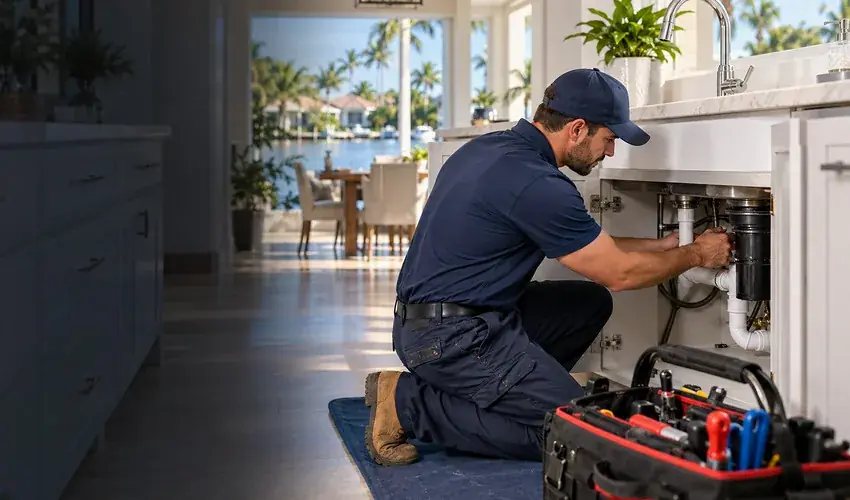
Galvanized Steel and Polybutylene: What's Actually in Your Walls
Galvanized pipe is steel with a zinc coating meant to resist corrosion. That coating wears down over decades, and once it does, the steel underneath rusts from the inside, gradually closing off the pipe's interior diameter. Low water pressure in an older home is often galvanized pipe narrowing, not a supply issue.
Polybutylene is a gray or blue plastic pipe used widely from the late 1970s through the mid-1990s, prized at the time for being cheap and fast to install. It reacts poorly with chlorine and oxidants commonly found in municipal water, breaking down slowly from the inside in a way that's invisible until a fitting fails.
If your home was built or last repiped anywhere in that window and you don't know what's running through the walls, that's worth finding out before it fails on its own schedule instead of yours.
Signs Your Home's Pipes Are Past Their Service Life
A few patterns point toward pipe material, not a single bad fixture.
Discolored or rust-tinted water, especially after the water's been off for a while. That's a classic sign of galvanized pipe corroding internally.
Water pressure that's dropped gradually over years, not suddenly. A sudden drop usually means a blockage or a leak. A slow, years-long decline usually means the pipe's interior diameter is shrinking from corrosion.
Repeated pinhole leaks in different spots over time. One leak is a fluke. Three or four in different locations over a couple of years means the pipe material itself is failing, not just one unlucky section.
A home built or plumbed between the 1950s and mid-1990s that's never been repiped. If nobody's told you the pipes were replaced, assume they weren't, and have it checked. Any one of these signs is reason enough to ask about repiping naples fl homeowners have relied on for their older properties.
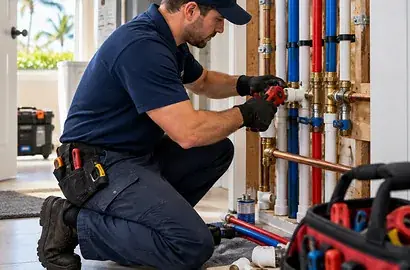
PEX vs. Copper: Choosing the Right Material for a Naples Repipe
PEX is flexible plastic tubing that's become the standard repipe material for most residential jobs. It resists the corrosion that kills galvanized pipe and the chemical breakdown that kills polybutylene, it's faster to install since it can run through existing wall cavities with fewer joints, and it typically costs less than a full copper repipe.
Copper is the traditional standard, and it still has real advantages. It holds up well to UV exposure if a line is ever run outdoors or exposed, and some homeowners prefer it for resale expectations in certain markets, since copper still reads as a premium material to some buyers.
For most whole-house repipes in Naples, PEX is the practical choice, especially given the reduced installation time and lower long-term corrosion risk in a hot, humid climate. We'll walk you through both options against your specific home and budget rather than defaulting to one without explaining why. Most repiping naples fl material discussions come down to this same PEX-versus-copper tradeoff.
Our Whole-House Repiping Process and Timeline
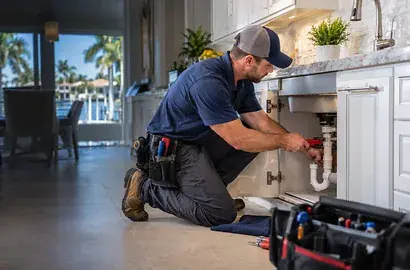
We start by identifying exactly what's currently running through your walls, since the material determines both the urgency and the approach. A quick inspection at accessible points, plus your home's age and history, usually tells us enough to plan the job.
Most whole-house repipes access new pipe runs through strategic openings rather than tearing out entire walls, running new PEX or copper alongside or in place of the old lines, then connecting fixtures back to the new system. Drywall patching is part of the job, not an afterthought billed separately.
A typical single-family repipe runs a few days from start to finish, depending on the home's size and how many fixtures and floors are involved. We give you a real timeline once we've seen the property, not a generic estimate that doesn't match your layout. That's the standard we hold every repiping naples fl consultation to.
Why Naples Homeowners Call Us Before an Insurance Renewal or Sale Falls Through
Repiping isn't always driven by a leak. More and more, it's driven by an insurance company or a home inspector flagging polybutylene or galvanized pipe before a renewal or a sale can go through.
A homeowners insurance company that spots polybutylene during an inspection may non-renew or add a rider excluding water damage claims tied to it. A buyer's inspector who flags the same material can stall or kill a sale entirely. Neither situation is something you want to discover with a deadline already ticking.
One local competitor's polybutylene article calls the material a "ticking time bomb," which gets your attention but never actually explains what a repipe involves, how PEX and copper compare, or what a realistic timeline looks like. We'd rather give you that information upfront than just the fear.
- We identify your pipe material before quoting anything
- We explain PEX versus copper honestly
- We give you documentation for insurance or sale purposes
- Straight answers, not generic sales pitches
We identify your pipe material before quoting anything. You get a real answer about what's actually in your walls, not an assumption based on your home's age alone.
We explain PEX versus copper honestly. Both have a place. We tell you which fits your situation and budget, not which one we'd rather install.
We give you documentation for insurance or sale purposes. A completed repipe with a clear record is exactly what satisfies an insurer's requirement or a buyer's inspection concern.
Common Questions Before You Call
Is repiping just a scare tactic to get me to spend money I don't need to spend? Not if the pipe material actually warrants it, and we'll tell you plainly if a partial fix or monitoring is the more honest answer for your situation. Repiping makes sense when the material itself is failing, not just because a home has aged past a certain point.
What if my insurance company is threatening non-renewal over polybutylene, how fast can this actually happen? We can usually move quickly once you've confirmed the material and have a renewal deadline. Tell us the timeline you're working with and we'll build the schedule around it rather than making you wait for a standard queue.
Will repiping mean living somewhere else for days while it's done? Most homeowners stay in the house during a repipe, with water shut off in sections as work moves through the home rather than the whole house being down for the full job. We'll tell you exactly what to expect for your specific layout before work starts.
Serving Old Naples, Moorings, Lake Park, Sun Terrace and Coquina Sands
Repiping calls concentrate heavily in Naples' older, established neighborhoods, where galvanized and polybutylene pipe are most common.
- Old Naples
- Moorings
- Lake Park
- Sun Terrace
- Coquina Sands
Ranch-style homes across Lake Park and Sun Terrace built in the 1960s and 70s are some of the most common repipe calls we get, while original mid-century construction around Old Naples and Moorings often hides galvanized pipe behind a fully renovated interior. Naples fl repiping calls from these five neighborhoods make up a large share of the work we do every month.
We also handle repiping naples fl calls in Park Shore, Port Royal, Aqualane Shores, and along the Airport-Pulling corridor, wherever older galvanized or polybutylene pipe is still doing the job it was never meant to do for this long.
Schedule a Repiping Consultation
If you're facing repeated pinhole leaks, discolored water, or an insurance or sale deadline tied to your home's pipe material, don't wait for the next failure to force the decision. Repiping naples fl residents count on us for is a phone call away, not a form to fill out.
Call (239) 880-1778 to schedule your repiping consultation.
Repiping FAQs

 FEEL FREE TO CONTACT